AI Engine
The AI Engine keeps guides within approved knowledge, applies the context that matters, shapes recommendations and enforces the boundaries required for public visitor use.


Context and intent
The Engine decides which signals matter to the current request. A visitor's location may be essential when they ask where to eat now and irrelevant when they are planning a trip for next month. Weather should influence the answer when it changes what is possible, not simply because weather data is available. The Engine also changes its response behaviour according to the job the visitor is trying to complete.


Recommendation architecture
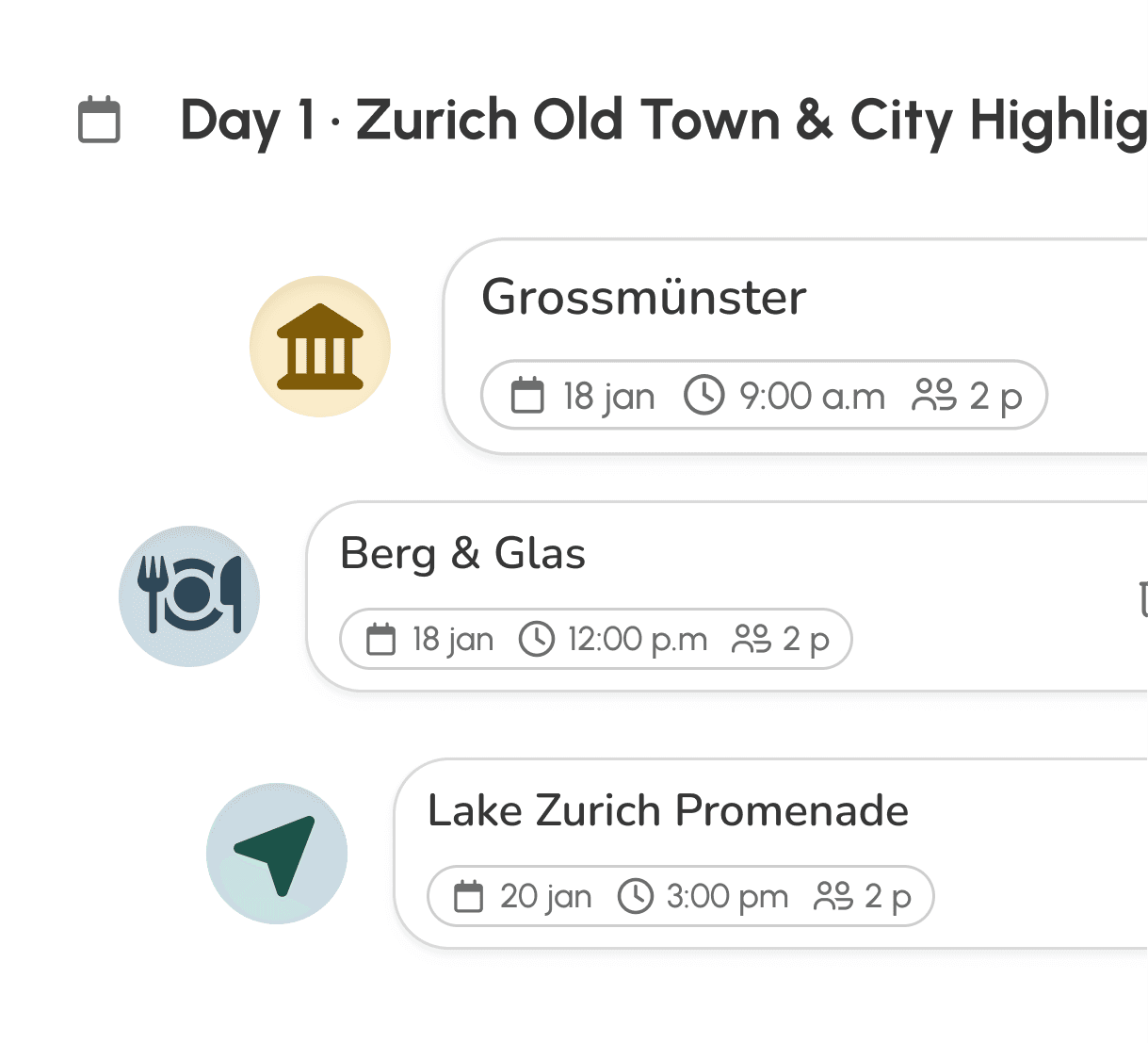
The Engine combines visitor intent, relevant context, the Local Guide's perspective, available options and your curation before it creates a shortlist.
General-purpose AI
Draws from broad model knowledge and public information
Recommendation behaviour is defined by the provider
Recommendation behaviour is defined by the provider
One general perspective across many topics
Joaia AI Engine
Works inside the permitted knowledge universe
Applies visitor intent and relevant situation
Uses the selected AI Local Guide's perspective
Lets the creator influence classifications and priorities
Produces a controlled shortlist with meaningful choice
General-purpose AI products such as ChatGPT or Gemini decide what to recommend through their own model behaviour, public information and product logic. The organisation asking the question has little influence over which local options are considered important or why one result is surfaced ahead of another.
Joaia gives the creator a deliberate role in that process. Curated knowledge, classifications, guide perspective and organisational priorities can influence the recommendation while the visitor's request and situation continue to determine what is relevant.
The weighting changes with each request. The result is not one permanent ranking for every visitor, but a shortlist built for the need and moment at hand.

Guardrails
Natural conversations within clear boundaries
The Engine keeps each guide inside its role and permitted knowledge and applies the safeguards required for public use.
Natural conversations within clear boundaries
A Roman guide remains inside the world and knowledge of Roman Curia instead of becoming a modern city assistant when someone asks about the railway station.
Use permitted knowledge
If current ticket rules are missing from the approved sources, the guide does not invent them from general model knowledge.
Handle sensitive subjects in context
A guide can explain war, violence or sexuality where they belong to the history of a place while refusing an unsafe request outside that context.
Resist prompt injection
A visitor cannot redirect the guide into revealing internal instructions or completing unrelated tasks outside the visitor experience.
Know when not to answer
When a request sits outside the guide's role or available knowledge, the Engine makes that boundary visible instead of producing a confident guess.
Guide visitors to the next step
When a request needs human help, the guide can direct the visitor to the appropriate contact or service instead of pretending it can resolve the issue itself.

In development
Joaia is extending the AI Engine from answering, explaining, recommending and planning into controlled actions with clear visitor value.
The first focus is on practical, comparatively low-risk tasks that follow naturally from a recommendation.
Reserve a restaurant
Help the visitor choose a suitable restaurant and complete the reservation through the available booking path.
Buy tickets and products
Turn collections, stories and specialist expertise into interactive guidance visitors can explore at their own pace.
Complete a public transport purchase
Identify the relevant transport product for the visitor's situation and help complete the transaction.
Built through real use
Refined through real destination questions
The AI Engine has been developed with destination partners and improved through extensive evaluation and live visitor use.
350
AI Engine development days
2,000+
Questions evaluated with destination partners before going live
1,000+
Prompt and orchestration improvements before going live
Trust and infrastructure
Built for public-facing AI in Europe
European hosting, customer-owned data, model flexibility and clear governance for organisations that need to stand behind the AI they publish.
Hosted in the EU
Production infrastructure and data residency follow the verified EU hosting scope defined for Joaia.
Your data stays yours
Customer knowledge remains separated and is not used to train third-party foundation models.
No model lock-in
Joaia can use and replace suitable models for different jobs without requiring customers to rebuild their guides.
Built for European requirements
Privacy, data protection and AI governance are designed around the requirements European organisations need to meet.
Plans
Choose the Guide Studio plan that fits your organisation
All plans include AI Engine Level 1, unlimited seats and one Web Assistant. Licences are billed annually.
Onboarding, support levels and the full feature comparison live on the Pricing page.


FAQ
Frequently Asked Questions
Questions about Guide Studio
What is the Joaia AI Engine?
The Joaia AI Engine is the specialised intelligence that powers every Joaia AI Local Guide. It determines how permitted knowledge, visitor context, intent, Local Guide perspective, recommendation logic and guardrails come together during a live interaction.
How is the Joaia AI Engine different from connecting an LLM to a knowledge base?
Does an AI Local Guide use only approved knowledge?
How does the AI Engine use visitor context?
How does Joaia's recommendation architecture work?
Can organisations influence what their AI Local Guides recommend?